
Presented by Dr. Anansi Wilson (they/them), Professor of Constitutional Law, Mitchell Hamline School of Law
This keynote and discussion will examine the general logic and impact of the Bostock ruling for the LGBTQ community while also questioning, wondering and imagining how the promise of these protections may fail to attach to the bodies and livelihoods of Queer People of Color—particularly BlaQueer and Trans people—and how we, as scholars, practitioners and change makers, might make way for an intersectional jurisprudence that recognizes the ways in which the law operates outside of the courtroom.
In this presentation, Dr. Wilson will invite participants to think through the implications, possibilities and loose ends of the Bostock ruling by engaging in a historical analysis of the cases, common law, jurisprudential moves and historical events that led us here. Dr. Wilson will begin with a survey of earlier colonial and common laws that regulated activities and bodies “on the basis of sex” as articulated in Boston, while noting and discussing how enforcement–private, legal and extralegal–and severity of enforcement of these laws and customs were handed down differently on the basis of race, gender performance, class and clockable sexuality. The discussion will then move to a discussion of the early arrest of the formerly enslaved William Dorsey Swann, now known as “The First Drag Queen,” to offer a dual example of the precedence of intersectional jurisprudence in the punishment of sexual minorities, as well as an opportunity for a proactive intersectional jurisprudence that meets the moment, not only for the named “gay” and “transgender” individuals and communities listed in Bostock, but for those who are nonbinary, agender, bisexual, pansexual and those who exist in compounded, intersectional sites of legal disregard, outside the reach of normative suspect class protections. Turning to Lawrence, and the experience of Tyrone Gardner, how might we better understand how race and sex(ual) discrimination collude and collide to create unique barriers to acquisition of full citizenship? This presentation will extend upon the critiques and opportunities presented in Kimberle Crenshaw’s groundbreaking “Demarginalizing the Intersection of Race and Sex: A Black Feminist Critique of Antidiscrimination Doctrine, Feminist Theory and Antiracist Politics,” primarily, that courts are failure to recognize claims of simultaneous “race and sex” discrimination amounts to a unique discrimination against Black women, in that case, and women of color in general. Here, we will engage in a critique and embrace of Bostock–and mark a path forward–that makes space not only for those discriminated against because they are gay or trans, but also because they are lesbian and Latina, BlaQueer, Asian and bisexual. The central query is, how do we make sure that some in the LGBTQ community are not consistently marked as “in and outside of law?” Inside of law insofar as being readily available to the reach of its disciplinary arm yet outside of law, insofar as being routinely being unreached by its purported protections?
Back to Conference Registration
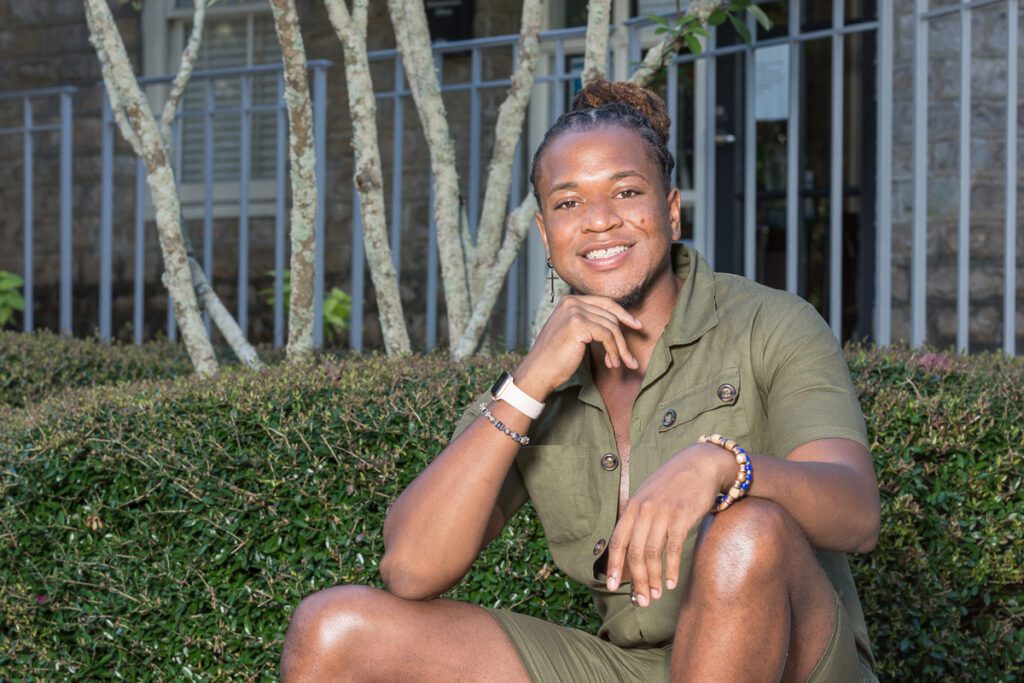
Dr. Anansi Wilson
Dr. Anansi Wilson is an award-winning scholar of law, literary and cultural studies, a racial-justice strategist, and an author of creative nonfiction. Their legal research is situated in legal philosophy, critical theory, political economy, and constitutional law. Their writing and scholarship primarily focuses on the history of Black thought, art, and imagination crafted in response to, and resistance against, the social, political, and legal realities of domination in the West.
They seek to understand the processes of retrenchment after moments of social progress, and how freedom dreams are nevertheless sustained. Wilson’s work analyzes the ever changing relationships between race, law, sexuality, power, and citizenship; both in the construction of law and policy and the maintenance of the way we live our lives. They are particularly concerned with Fourth, 13th, 14th, and 15th amendment questions. Their teaching interests include criminal law, criminal procedure, constitutional law, federal criminal civil rights, Fourth, 13th and 14th amendment law, Reconstruction, political and civil rights, critical race studies, LGBTQ issues, and all areas pertaining to race, law, and society.
Dr. Wilson employs Critical Race, Black Feminist, Performance and Women & Gender Studies and legal methodologies to examine how instances and (extra) legal precedents of anti-Black violence and racial-sexual terror continue to frame and impact notions of Black being and citizenship. Professor Wilson employs a multidisciplinary gaze to engage the creative, the legal, and the literary to uncover an emerging approach to encountering, understanding, and extrapolating anti-Blackness as a jurisprudential logic, underpinning, and precedent embedded in the Constitution, the Federalist Papers, and decisions they inform.